Observability
Metrics, logs, traces, dashboards and actionable alerting.

We help organizations make technology operations more reliable, observable and efficient by connecting monitoring, automation, service practices and lifecycle management.
Improve your operations →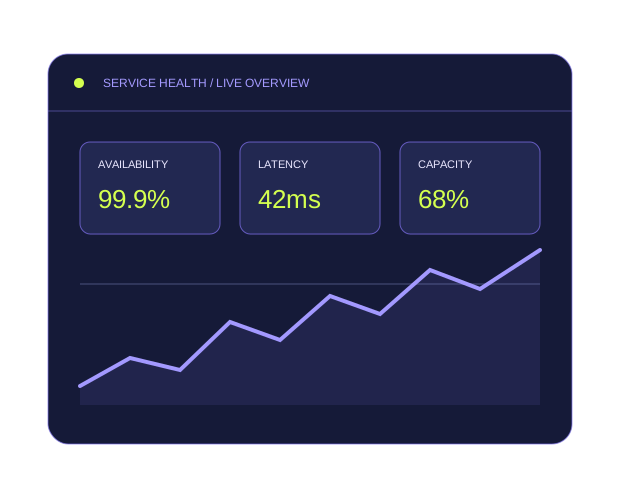 IT Operations
Build the visibility, processes and engineering practices needed to keep critical systems healthy and continuously improve them.
Understand service health through meaningful telemetry.
Establish clear incident ownership and escalation.
Use reviews and trend analysis to address systemic causes.
Reduce toil and strengthen reliability over time.
A connected operations model combines people, process and platform engineering.
Metrics, logs, traces, dashboards and actionable alerting.
Service objectives, incident response and resilience practices.
Provisioning, configuration, deployment and response automation.
Operational standards, access controls and change practices.
Utilization, bottleneck analysis and demand planning.
Patching, upgrades, backups, documentation and maintenance.
Operations should create feedback that improves the systems being operated.
Define service signals, thresholds and ownership.
Assess impact, urgency and dependencies.
Restore service through documented response practices.
Identify contributing factors and recurring patterns.
Prioritize engineering changes that prevent repeat incidents.
Select measures that reflect service quality and business impact—not dashboard volume.
Availability, service objectives and incident recurrence.
Time to detect, acknowledge and restore service.
Manual effort, toil and automation coverage.
Resource utilization, headroom and forecast accuracy.
The right operating model depends on service criticality, team structure and technology footprint.
Yes. Operating practices can complement existing teams, responsibilities and escalation paths.
Observability design and implementation can include telemetry, dashboards, alerting and runbooks.
Automation opportunities include provisioning, configuration, deployment and selected incident response tasks.
Move from isolated alerts to actionable operational insight.
Effective operations connect technical signals to service impact. Teams need to know what is healthy, what is degraded, who owns the response and how recurring problems are prevented.
Map critical services, dependencies and the signals that indicate health.
Define severity, ownership, communication, escalation and restoration practices.
Identify recurring patterns and address underlying causes rather than symptoms.
Use traceable changes, validation, rollback planning and clear approvals.
Document routine tasks, recovery steps, dependencies and operational decisions.
Choose indicators that support better decisions.
Metrics should be selected with the service and business context in mind. Examples include availability, latency, error rates, recovery time, change failure rate, capacity headroom and alert noise.
Track service availability, error budgets or agreed service-level indicators.
Understand latency, throughput and user-facing performance.
Review time to detect, acknowledge, mitigate and restore service.
Measure manual toil, repeat incidents and automation coverage.
Monitor utilization, saturation and forecasted resource demand.