01
Discovery outputs
Current-state findings, stakeholder needs, constraints, risk register and agreed success criteria.

Our approach connects business context with practical engineering. We move from discovery to architecture, delivery and operations with clear decisions and shared ownership.
Start a conversation →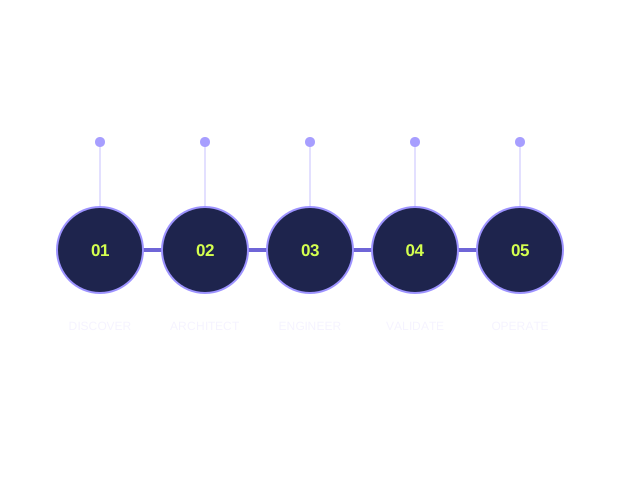 Our Approach
Each stage produces concrete outputs that help teams make informed decisions and move forward with confidence.
Business goals, users, current systems, dependencies, constraints and success measures.
Target architecture, technology choices, integration patterns, security and roadmap.
Build, configure and integrate applications, platforms and infrastructure.
Test functionality, security, performance, resilience and readiness.
Production preparation, documentation, runbooks and knowledge transfer.
Measure outcomes, gather feedback and optimize the technology estate.
We collaborate with stakeholders and technical teams throughout the lifecycle, making trade-offs visible and keeping delivery aligned with business priorities.
Start with the business result, not a predetermined technology.
Consider dependencies and the wider enterprise environment.
Integrate security and governance into engineering decisions.
Design for supportability, observability and long-term ownership.
A practical engagement produces usable decisions and artefacts—not just presentations.
Current-state findings, constraints, risks and prioritized requirements.
Target-state design, integration views and technical decision records.
Working software or platform capability, automation and test evidence.
Runbooks, documentation, handover and operational readiness.
Service measures, backlog and prioritized optimization plan.
Bring us the context. We will help shape a practical engineering path forward.
Start a conversation →Clear outputs make complex engineering easier to govern.
The exact artefacts vary by engagement, but each phase should leave the team with useful decisions, evidence and next steps—not just meetings and slide decks.
Current-state findings, stakeholder needs, constraints, risk register and agreed success criteria.
Target architecture, key design decisions, integration map, security considerations and delivery roadmap.
Working software or platform increments, source/configuration artefacts, test evidence and technical documentation.
Functional, performance, security and resilience findings with acceptance status and open risks.
Runbooks, monitoring guidance, support ownership, knowledge transfer and release records.
Operational insights, prioritized backlog and recommendations for the next iteration.
A collaborative model with clear technical ownership.
We work with client stakeholders and internal teams to keep decisions visible, clarify dependencies and make handover part of delivery.
Record assumptions, trade-offs, dependencies and design rationale.
Align responsibilities between engineering, security, operations and business stakeholders.
Use reviewable milestones and validation checkpoints to reduce delivery risk.
Build internal understanding through documentation, walkthroughs and practical handover.